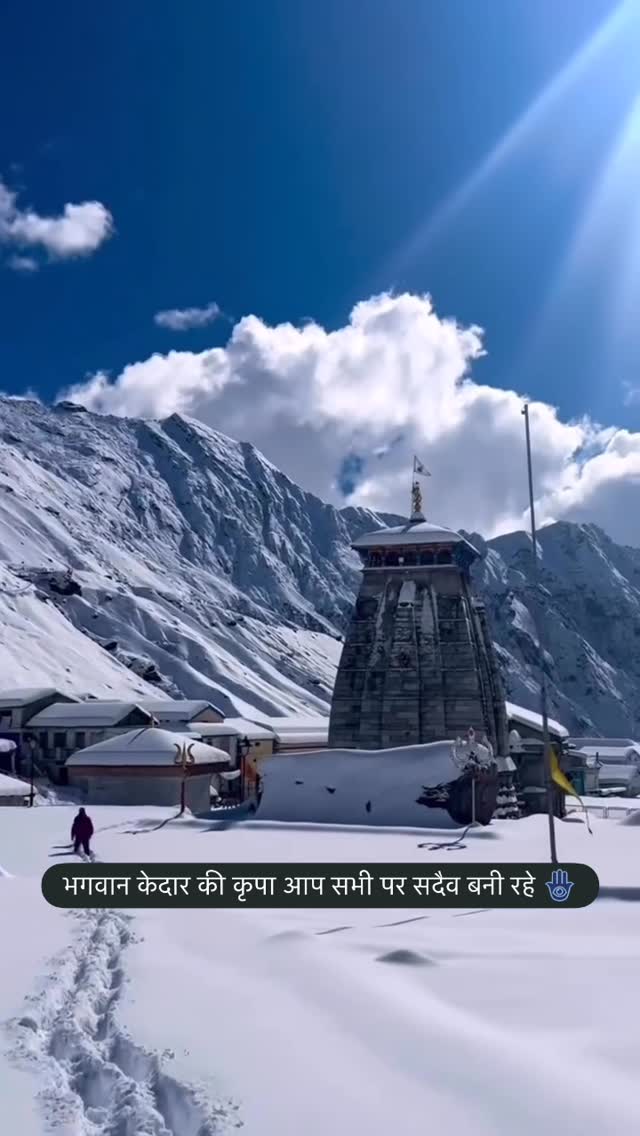
Read the accounts pilgrims post after they get back and one line repeats almost word for word: the trek was so much harder than I expected. One traveller described it as ten hours of climbing and said every step felt worth it only once he reached the top. That is the honest shape of the Kedarnath walk. It rewards you completely, and it asks for more than the photographs suggest.
We have walked it with more than three hundred pilgrims since 2019, including doctors, grandparents and people who had never climbed a hill in their lives. Here is what we tell every one of them before they start.
The numbers that matter
The trek begins at Gaurikund, around 1,982 metres, and ends at the temple at 3,583 metres. The path runs roughly 16 to 18 kilometres, rebuilt and rerouted after the 2013 floods, and the climb gains about 1,600 metres along the way. Most fit walkers take seven to ten hours up. Older pilgrims and families often split it, resting overnight partway, and that is a wise choice rather than a weakness.
The distance is not the hard part. The altitude is. Above 2,500 metres the air thins enough that the same staircase that felt easy in your city leaves you breathing hard, and the last few kilometres to the temple are where people underestimate themselves.
You have more options than your own two feet
Nobody is required to walk the whole way, and there is no loss of merit in arriving rested. Three alternatives run the route.
Ponies carry you for the bulk of the climb and are the most common choice for those who want to save their legs for the temple itself. Palki, a chair carried by four bearers, suits pilgrims who cannot ride or walk far. The helicopter shuttles from Phata, Sersi and Guptkashi cover the valley in minutes and are booked through the official IRCTC heliyatra portal, with seats that sell out early in the season and prices that move with demand.
We arrange whichever of these fits the person. For many families the right answer is a mix: walk the gentle opening stretch, take a pony through the steep middle, keep the helicopter in reserve for the descent if knees are complaining.
When to start walking
Begin before dawn. Pilgrims who set off at four or five in the morning reach the temple with the day still ahead of them, beat the heat on the lower path, and leave a margin if the climb takes longer than planned. The ones who start late are the ones caught finishing in the dark and the cold.
Weather turns fast at this height. Mornings are usually clear and afternoons cloud over, so an early start also buys you the better light and the safer ground.
What to carry, and what to leave
Layers, because you will sweat on the climb and freeze the moment you stop. A windproof outer shell. Real walking shoes with grip, not new ones you have never worn. More water than you think, and something with sugar and salt for the long middle hours.
Keep the load light. Every extra kilogram is one you carry up 1,600 metres of climb. And from the 2026 season, leave your phone with your group before you reach the temple itself, where cameras and mobiles are now prohibited inside the premises.
Prepare your body, not just your bag
The single best thing you can do in the weeks before is walk. Long walks, stairs, a daypack on your back to get used to the weight. Pilgrims who arrive having trained describe the climb as tiring. Pilgrims who arrive cold describe it as the hardest day of their lives. The difference is a few weeks of preparation, not natural fitness.
If you have a heart or lung condition, or you are bringing an elderly parent, get a proper checkup first and tell us. We build the altitude in gradually, keep medical support on the route, and there is no shame in turning a one-day push into a two-day climb.
Why people go back
For all the talk of how hard it is, the accounts almost never end on the difficulty. They end on the temple appearing through the cloud, the stone walls that have stood since long before any of us, the quiet at the top that the queue below never touches. One pilgrim wrote that he gets teary every time he so much as sees a photograph of the place now.
That is the trade the mountain offers. It asks for a hard day on your feet and it gives back something most people struggle to put into words. Go prepared, go early, and let the climb be part of the pilgrimage rather than the obstacle to it.
If you would rather have all of this handled for you, that is what we do. Tell Ritesh where your heart wishes to go.
WhatsApp Ritesh